
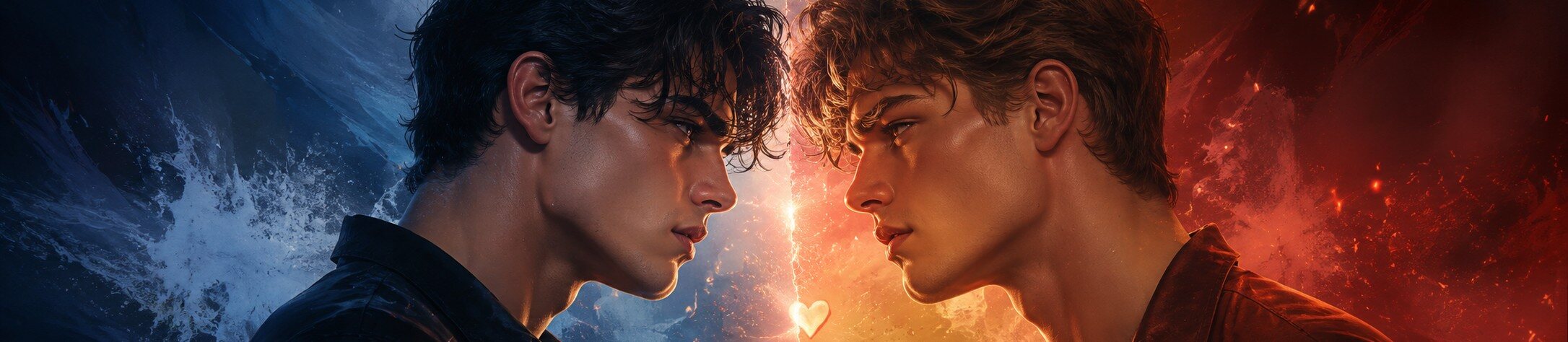
The weakest enemies-to-lovers stories are built on insults. The strongest are built on values.
If two characters only dislike each other because they are rude, arrogant, or inconvenient, the conflict usually runs out of fuel. Once the writer softens them, there is nothing substantial left between them.
A better version gives each character a worldview the other genuinely threatens.
One believes loyalty means protecting the group at all costs.
The other believes loyalty means telling the truth, even when it hurts the group.
One believes rules keep people safe.
The other believes rules protect the people already in power.
One believes love requires sacrifice.
The other believes love without self-respect becomes surrender.
Now the conflict is not “they are mean to each other.” The conflict is “each person sees the other as dangerous for a reason that makes emotional sense.”
That is what gives the romance power.
Attraction becomes unsettling because the enemy is not simply wrong. They are partly right. The protagonist begins to see the cost of their own certainty. The love interest becomes compelling not because they are charming, but because they expose a blind spot.
This also prevents the romantic turn from feeling sudden. The shift from enemies to lovers should not happen because one character becomes nicer. It should happen because each character discovers the wound, fear, or lived experience behind the other’s values.
The question to ask is not:
“Why do they hate each other?”
Ask:
“What truth does each character defend that the other character cannot yet accept?”
That question turns banter into pressure. It turns arguments into revelation. It makes the eventual romance feel earned because love does not erase the conflict.
It transforms it.
The best enemies-to-lovers stories are not about two people discovering they were never enemies.
They are about two people discovering that the enemy was carrying a truth they needed.
The weak version is simple: they hate each other because one is sarcastic and the other is bossy. They trade insults, compete for attention, and eventually realize they are attracted to each other.
That can be fun, but it is thin.
The stronger version gives them opposing values.
One character believes the student council should protect tradition because tradition gives people stability. He thinks change is dangerous when people are already anxious.
The other believes tradition is just a polite word for exclusion. He thinks rules should be challenged whenever they keep outsiders from belonging.
Now every argument has weight.
When they fight over a school event, they are not really fighting over decorations, budgets, or who gets final approval. They are fighting over safety versus change. Belonging versus order. Loyalty to the past versus responsibility to the people being left out.
The romance becomes compelling because each character is forced to admit the other has a point.
The traditionalist may realize that stability can become cowardice.
The reformer may realize that change without care can hurt people too.
Their attraction works because it does not erase the conflict. It makes the conflict more intimate.
Each one becomes dangerous to the other because each one carries a truth the other needs.
Do not start with:
“They hate each other because he is arrogant.”
“They hate each other because he is rude.”
“They hate each other because they always argue.”
Instead, answer these five questions:
What does Character A believe is morally right?
What does Character B believe is morally right?
Why does Character A see Character B’s belief as dangerous?
Why does Character B see Character A’s belief as dangerous?
What truth is each character protecting that the other does not yet understand?
Then write one argument scene where neither character is trying to be cruel.
They should both be defending something that matters.
The goal is not to make one character correct and the other wrong. The goal is to make the reader think, “I understand why both of them believe this.”
That is where enemies-to-lovers starts to gain real pressure.
Acknowledgement: AI was used in the creation of this article and artwork.
-
 2
2
-
 1
1
Recommended Comments
Join the conversation
You are posting as a guest. If you have an account, sign in now to post with your account.
Note: Your post will require moderator approval before it will be visible.