
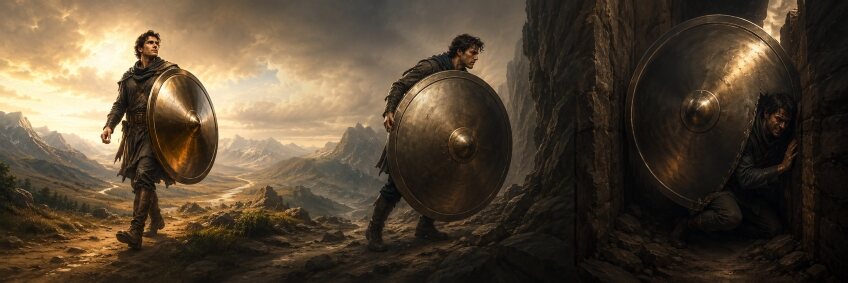
The most believable character flaws are often strengths pushed past the point where they remain useful.
A loyal character may defend someone who no longer deserves it. An independent character may refuse help when he cannot succeed alone. A patient character may tolerate mistreatment for far too long. The quality itself is not bad. The problem is that the character relies on it even when the situation requires something different.
This creates stronger conflict than simply assigning a negative trait such as selfishness, arrogance, or dishonesty. A disconnected flaw can feel added to make the character imperfect. A strength that becomes harmful grows naturally from who the character already is.
Ask one question:
When does this character’s greatest strength become the wrong response?
Suppose your protagonist is exceptionally responsible. That strength may make him reliable, respected, and capable of carrying others through a crisis. But responsibility becomes destructive when he believes every problem is his to solve. He takes on too much, hides his exhaustion, and denies other people the chance to make their own choices.
Now his strength can drive both the story and his character arc. Early successes reinforce his belief that he must handle everything. Later, the same behavior creates increasingly serious consequences. Growth does not require him to stop being responsible. It requires him to recognize when responsibility means trusting someone else.
A satisfying character arc often preserves the strength while changing the way it is used.
Do not ask only, “What is my character good at?”
Ask, “What will this strength cost him when he cannot let it go?”
My character’s greatest strength is: ________
This strength has helped them by: ________
They rely on it because: ________
It becomes the wrong response when: ________
By continuing to use it, they cause: ________
They must learn that this strength needs: ________
Then write a short scene in which the strength initially appears helpful but creates a new problem by the end.
Acknowledgement: AI was used in the creation of this article and artwork.
-
 2
2
Recommended Comments
Join the conversation
You are posting as a guest. If you have an account, sign in now to post with your account.
Note: Your post will require moderator approval before it will be visible.