Jump to content

cadence - Word of the Day - Sat Jan 17, 2026


Quote

cadence - (noun) - The rhythmic pattern of words or phrases that gives prose its flow and musicality.
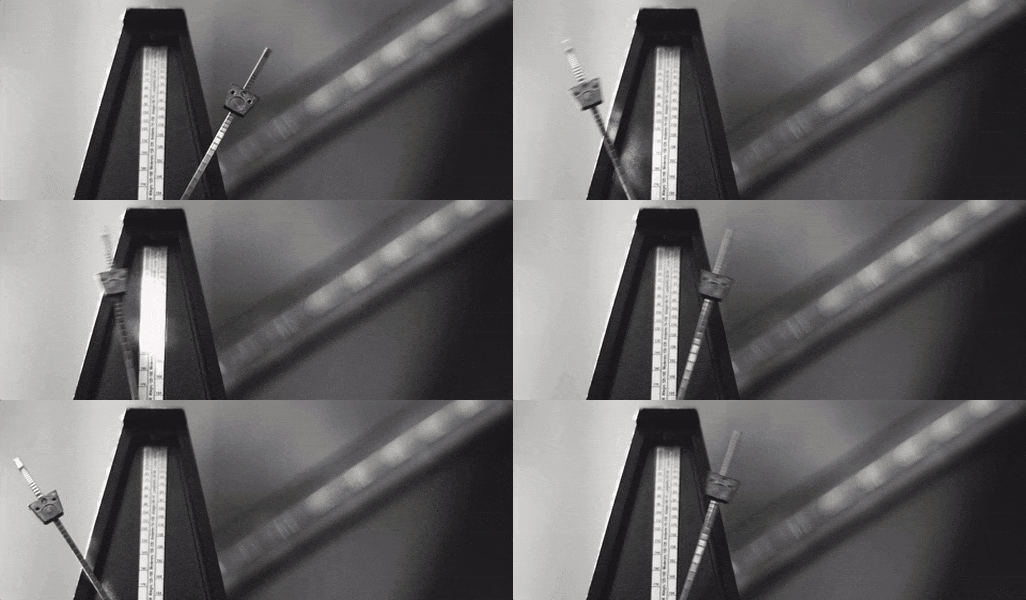
200.gif

Quote

A calm cadence in the narration softened what might otherwise have felt like an abrupt revelation.

Quote

Author tip: Read sentences aloud to test cadence.
Genre tags:  All, Poetry, Literary, Historical, Fantasy


  • Like 10

4 Comments


Recommended Comments

Bill W

Posted

Cadence in writing refers to the rhythmic flow, pace, and musicality of prose or poetry, determined by sentence length, structure, and word choices.  By manipulating cadence, writers create mood, enhance emotional impact, and prevent monotony. Effective cadence keeps readers engaged by alternating between fast and slow, or simple and complex, sentence structures. 

Key Aspects and Types of Cadence:  
Punctuation as Direction: Commas, periods, and dashes dictate pauses, allowing the writer to control the "falling" or "rising" of the reader's voice.  
Rhythm & Flow: The "beat" of the prose that determines how fast or slow a passage is read. 
Sentence Variation: Mixing short, punchy sentences with longer, complex ones controls the tempo, often speeding up during action scenes or slowing down for reflection. 
ParallelismUsing similar grammatical structures (e.g., "I came, I saw, I conquered") creates a lyrical, balanced cadence. 

Examples of Cadence: 
Staccato (Fast/Tense): "She looked at him. He turned away. She frowned. He didn't speak". 
Lyrical/Descriptive: "I was also a shrimper's son in love with the shape of boats". 
Dramatic Shift: Using a very short sentence after a long one for emphasis (e.g., "...and yet, they failed."). 

Improving Cadence in Writing:  
Read Aloud: This is the most effective way to hear if the rhythm sounds natural or jarring. 
Vary Sentence Length: Avoid using consecutive sentences with the same word count or structure. 
Match Tempo to Tone: Use shorter sentences for action or high emotion, and longer, fluid sentences for description or introspection. 

Difference Between Cadence and Rhythm: 
While often used interchangeably, rhythm is the underlying, repeating beat, whereas cadence refers to the overall, larger-scale modulation of that flow—the "rise and fall" of the language. 

Common Mistakes to Avoid: 
Monotony: Using the same sentence structure throughout (e.g., all Subject-Verb-Object) makes writing feel dull. 
Ignoring Punctuation: Failing to use commas or periods to break up long, exhausting sentences. 
Overuse of Conjunctions: Too many "and"s or "but"s can ruin the flow, making it sluggish. 

  • Like 1

Create an account or sign in to comment

You need to be a member in order to leave a comment

Create an account

Sign up for a new account in our community. It's easy!

Register a new account

Sign in

Already have an account? Sign in here.

Sign In Now
×
×
  • Create New...